Skip to content


Behind every successful beauty brand is a box that does its job quietly and reliably. Unboxing a cosmetic order is an emotional moment for your buyers. When a package arrives damaged, messy, or generic, people move on to another brand. Before anyone feels the texture of your cream or sees how your lip gloss looks on their skin, they judge your product by the box in their hands. Custom packaging for beauty brands must balance structural integrity, legal labeling requirements, and shelf presentation.
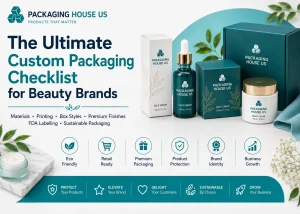
Good packaging starts with good planning. Packaging House US has put together this checklist to help you choose the right materials, printing techniques, and box sizes. Create custom cosmetic boxes to protect your products and help your brand grow
What Is Custom Packaging for Beauty Brands?
Custom packaging for beauty brands means boxes that have exact sizes and your brand colors to pack your cosmetics and skincare products’ boxes made to fit their products instead of using generic stock packaging. It holds bottles or jars firmly, displays your brand story, and protects your products during retail shipping and online delivery.
Why You Need Custom Packaging for Your Beauty Products
Thin stock packaging makes even great skincare feel cheap. Custom packaging protects the delicate formulas that you take to market after hard work, builds shelf recognition, and encourages repeat buyers. The box is the first interaction your customer has with your cosmetics, which makes it essential for both product safety and sales growth. Here are the benefits of custom packaging for your cosmetic or skincare products:
- Complete Protection Across the Supply Chain
- Stronger Brand Recognition and Shelf Appeal
- Consumer Trust and Sustainable Loyalty
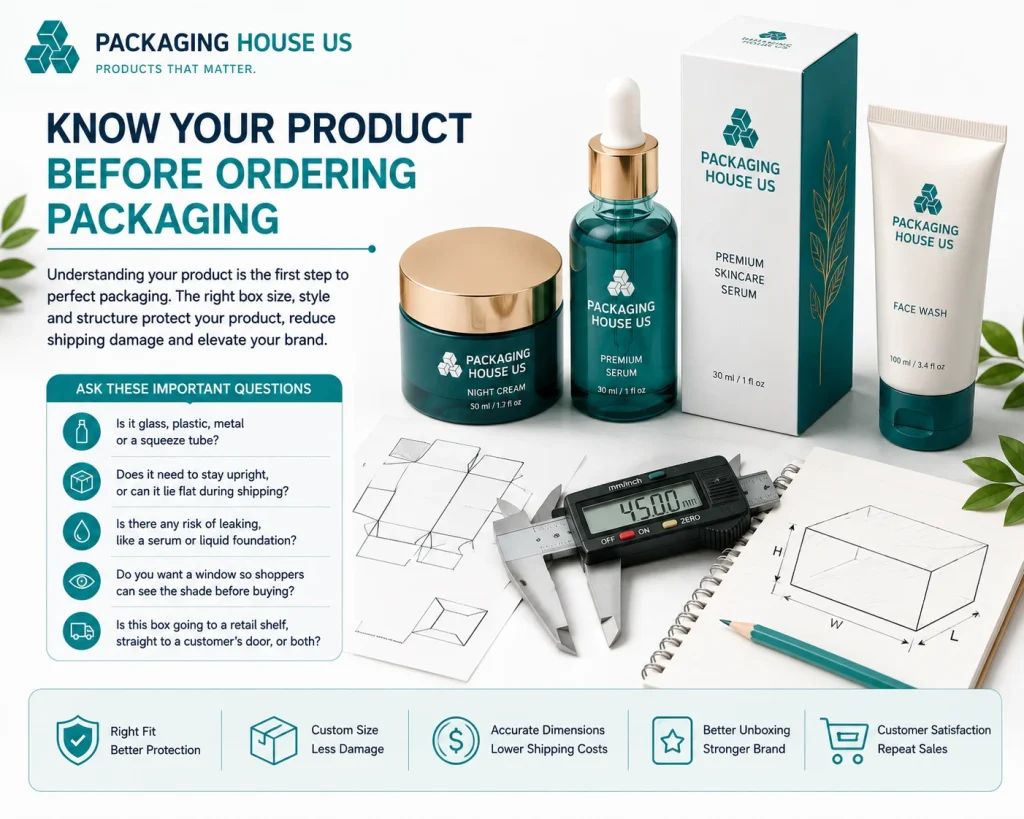
Know Your Product Before Ordering Packaging for Cosmetics and Skincare Products
Before you touch a design mockup, answer a few honest questions about the product itself:
- Is it glass, plastic, metal, or a squeeze tube?
- Does it need to stay upright, or can it lie flat during shipping?
- Is there any risk of leaking, like a serum or a liquid foundation?
- Do you want a window so shoppers can see the shade before buying?
- Is this box going to a retail shelf, straight to a customer’s door, or both?
A lip balm tube and a bottle of face wash have almost nothing in common structurally. Yet both get lumped under “skincare packaging” all the time. Custom dimensions are important because a box that is too big for a small product increases shipping costs and allows the item to move around inside.
Which Material is Best for Beauty Packaging?
Selecting the right paperboard or corrugated stock protects your cosmetics and gives the box a solid, quality feel. The material must support the weight of your product while holding up against shipping handling.
SBS Paperboard (Solid Bleached Sulfate)
This is the gold standard for high-end retail skincare and cosmetics. The material uses 100% white virgin wood fibers. It offers a smooth surface optimized for crisp four-color process printing. Its dense base resists moisture and holds clean scoring lines without cracking at the edges.
Kraft Paperboard
This material option uses unbleached, rustic wood pulp. It provides a natural brown texture ideal for clean or organic beauty lines looking to emphasize sustainability. The raw fibers offer excellent tear resistance. But here is the catch: the natural brown color shifts how light inks look, so you must use darker spot colors or opaque white base layers.
Corrugated Fluted Board
This structure uses three distinct layers of paper. A wavy middle layer sits between two flat linerboards to create high crush resistance. We use this substrate specifically for e-commerce mailers to absorb impact and protect your primary containers from rough automated sorting machines.
Rigid Chipboard
This uses thick, non-bending compressed paperboard wrapped in premium art paper. It is reserved for high-ticket luxury items and multi-product gift sets. The structural weight signals immediate value to the consumer before they even see the product inside.
Choose the Right Box Style to Secure Your Products
The physical shape of your box dictates how easy it is to pack on your assembly line and open on the consumer end. Different beauty products need different box styles to make them look good and be easy to use.
- Two-piece boxes: A base and lid are good for compact powders or small gift sets, and they slow down the unboxing moment in a good way.
- Tuck-end boxes: Quick to assemble and budget-friendly, a solid choice for smaller items like lip gloss tubes. This style is a standard choice for your custom lipstick box.
- Sleeve & Tray: Outer shell slides right off an inner box—gives a nice matchbox effect when customers open it.
- Window boxes: Front panel cut-out lets shoppers see the actual product shade before buying.
- Rigid boxes: Made with thick board that stays solid. Best choice for heavy gift sets or holiday collections.
- Snap-lock boxes: Heavy-duty cartons with self-locking bases that safely support weightier glass bottles and hair products.
We build custom cosmetic boxes around the actual product, compact for single items and larger with compartments for bundles, so nothing rattles loose inside an oversized box.
Dominate Retail Shelves with Prestigious Custom Packaging
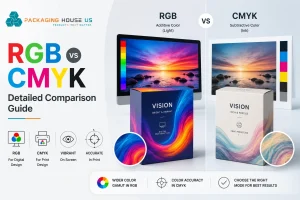
Your graphics must communicate your brand value within three seconds of visual exposure. But digital design layouts must align with physical industrial printing realities. Always design your artwork files in the CMYK color space from the start. Digital screens display color using light, but printing presses apply ink. Designing in RGB causes muddy shifts in color on your physical boxes. By utilizing the PMS (Pantone Matching System) to specify exact spot-color ink formulas. Solid color matching keeps your brand’s colors consistent across every production.
Bold, heavy fonts keep your text sharp. Avoid thin, writing styles that smear on raw cardstock. Small print needs extra care. Print ingredient lists and batch codes in a thick font so shoppers can read them under bad store lighting. Place your main logo high on the front panel where people see it first. This ensures your logo is fully visible on custom serum boxes even if it is positioned behind low retail shelf barriers or counter display lips.
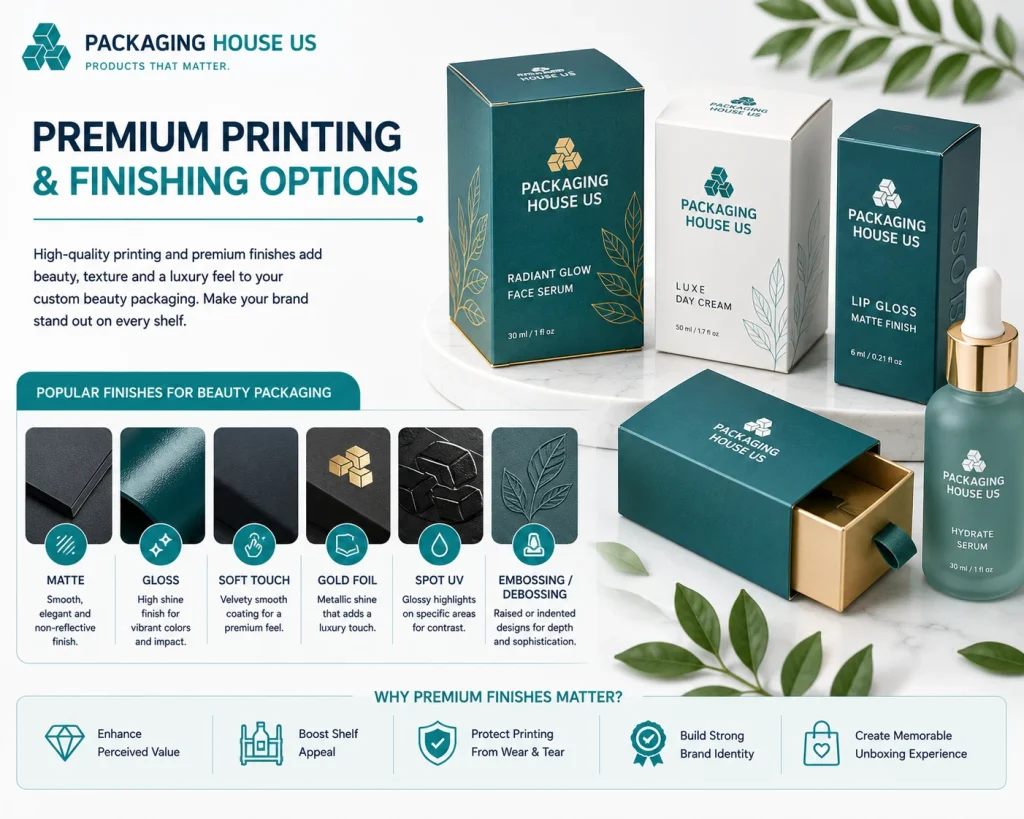
Signature Decorative Touches That Transform Beauty Boxes
Premium beauty consumers buy with their hands. Adding unique tactile finishes to standard print runs creates distinct contrast on a crowded shelf.
- Matte Finish
- Gloss Coating
- Soft-Touch Lamination
- Foil Stamping
- Embossing & Debossing
- Spot UV
Essential US Labeling Rules for Cosmetics and Skincare Products
This step gets skipped more than it should, and it is the expensive one to get wrong later. Cosmetic packaging sold in the US generally needs to show:
- INCI ingredient names, listed correctly
- A batch number, for traceability
- A barcode (UPC or EAN), for retail and inventory
- An expiration date or PAO (Period After Opening) symbol, where it applies
- Net weight or volume
- Manufacturer or distributor information
FDA cosmetic labeling rules exist to protect the customer and the brand. A missing batch number seems minor, right up until there is a recall and no way to trace which production run it came from. Review labeling with your packaging partner before locking artwork, not after the boxes are already printed.
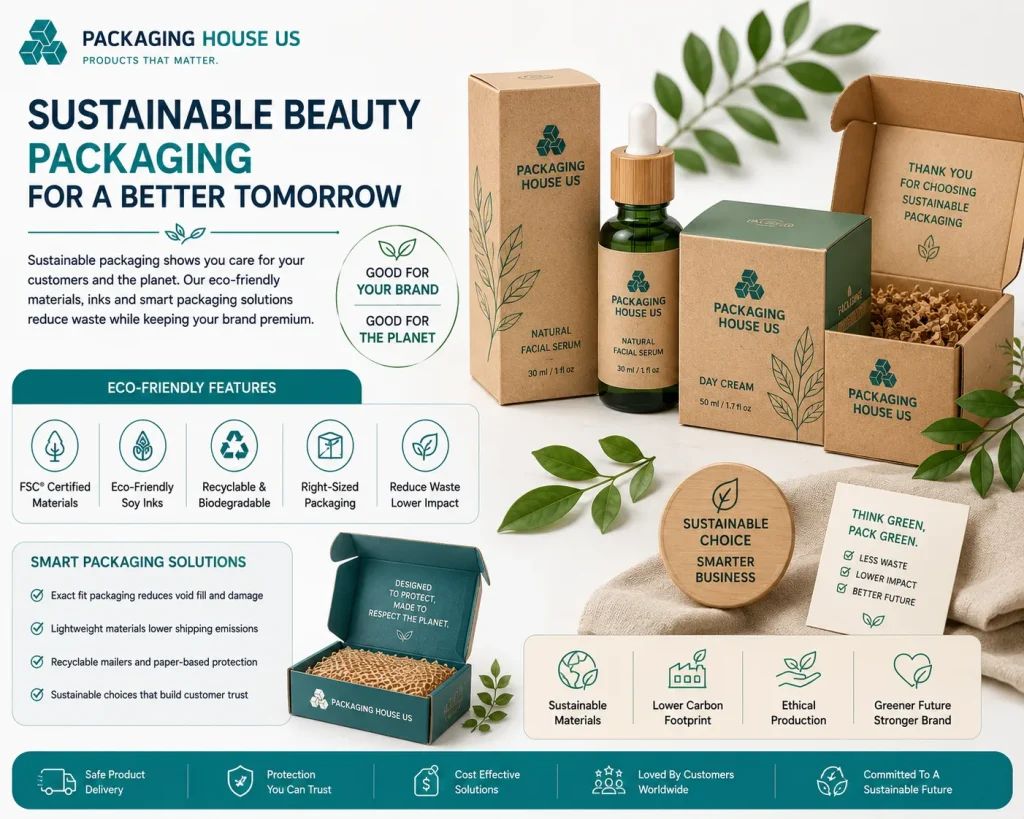
Sustainable Beauty Packaging That Protects Profits
People read your box before they ever touch your formula. Throwing a bottle into an oversized carton packed with plastic film turns away buyers who care about landfill waste. Simple, natural packaging cuts material expenses, shrinks freight charges, and turns first-time buyers into repeat customers.
- FSC Paper: Order paperboard from forest managers who plant new trees whenever they harvest old ones.
- Soy Inks: Swap petroleum-based ink for plant oils so recyclers can clean the paper pulp without harsh chemicals.
- Water Coatings: Skip plastic lamination and run a water-based finish over your print so the box dissolves cleanly in pulp vats.
- Exact-Fit Boxes: Build your carton to match your bottle dimensions. This gets rid of plastic void fill and packs more units onto every shipping pallet.
- Recycled Stock: Pick post-consumer paper to give your cartons a raw, earthy hand-feel while keeping used paper out of local dumps.
Don’t Forget to Get a Sample Before Full Production
Never print thousands of boxes without testing a physical prototype first. Checking a sample lets you confirm dimensions, spot color shifts, and test paperboard strength before you lock in your budget.
Put your bottle inside the box to check the fit. Pop the flaps open and shut ten times to see if the locks hold fast or tear the paper. Drop a packed sample in the mail to your home address to see how it handles real postal transit. That single test reveals loose fits, bad glue, and weak stock before you waste cash on a full run.
Common Mistakes That Ruin Beauty Packaging
Even seasoned brand owners stumble into simple packaging traps. Avoiding these mistakes preserves your margin and protects your shelf reputation.
Forcing Custom Bottles Into Stock Boxes
Dropping a unique serum bottle into a standard off-the-shelf box leaves dead air. The product shifts during transit, breaks seals, and crushes the outer carton. Tailor your box dimensions directly to your primary container.
Designing Around Outer Box Specs
Paperboard stock takes up space inside the carton. Sizing artwork or structural panels off exterior measurements means your bottle won’t slide inside. Always get the internal clearance specs from your converter before cutting the paperboard.
Creating Annoying Unboxing Hassles
Wrapping jars in layers of tape, plastic shells, and tight paper flaps irritates buyers. Keep the box opening fast and simple so people reach your product without hunting for scissors.
Leaving Off Safety Seals
People refuse to buy if the custom cream boxes or custom lotion boxes look opened. Add a simple tear-strip or a sticker seal so buyers know the formula inside is clean and fresh.
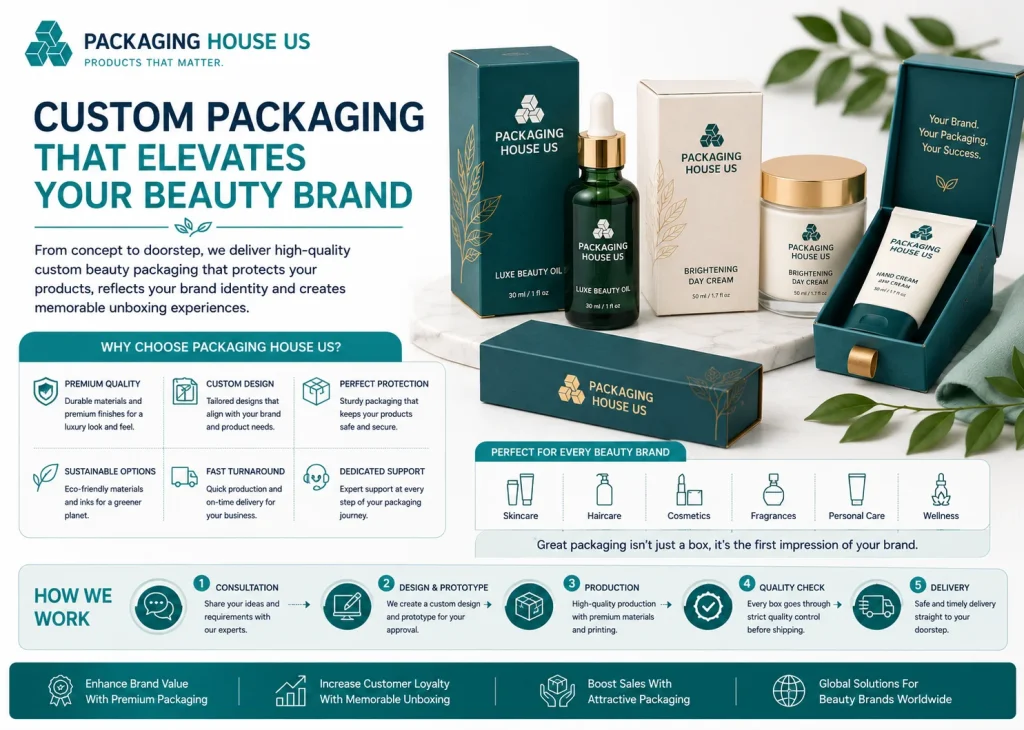
Work With Packaging House US for Custom Beauty Boxes
Good packaging protects your inventory and looks sharp on the shelf. Whether you fill beard oils, lotions, hair extensions, or nail polishes, exact box sizes keep your stock safe.
At Packaging House US, we make custom boxes built around your real products. We walk you through board weight, box sizing, print setups, and surface coats. Contact us today for a quick quote.
FAQ
What text goes on US cosmetic packaging?
Print the product title, net weight, full ingredient deck, business contact info, safety warnings, batch number, and barcode.
Which paperboard should you pick?
Solid paperboard works for store shelves. Corrugated card is suitable for shipping boxes. A thick rigid board works for high-end gift sets.
How do inserts stop shipping damage?
Paperboard dividers lock glass bottles in place so they cannot knock together, crack, or leak during delivery.
Can new brands get short box runs?
Yes. Digital presses let us print small runs without heavy setup charges, keeping initial orders budget-friendly.