Skip to content


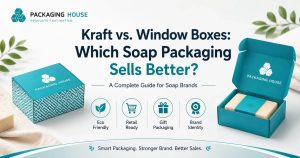
Packaging does more than product protection. A soap box tells a customer what to expect before they’ve unwrapped the bar. That first impression shapes trust, perceived quality and decides whether the sale happens at all. Two options dominate the soap packaging conversation: Kraft boxes and window boxes. Both work well but they work well for different products, different audiences and different sales channels which is exactly what this comparison sorts out.
Kraft boxes lean into natural, handmade and eco-conscious branding. Window boxes lean into visibility and shelf presence. Neither is universally better. The right choice depends on what your soap is made of, who’s buying it and where it’s being sold.
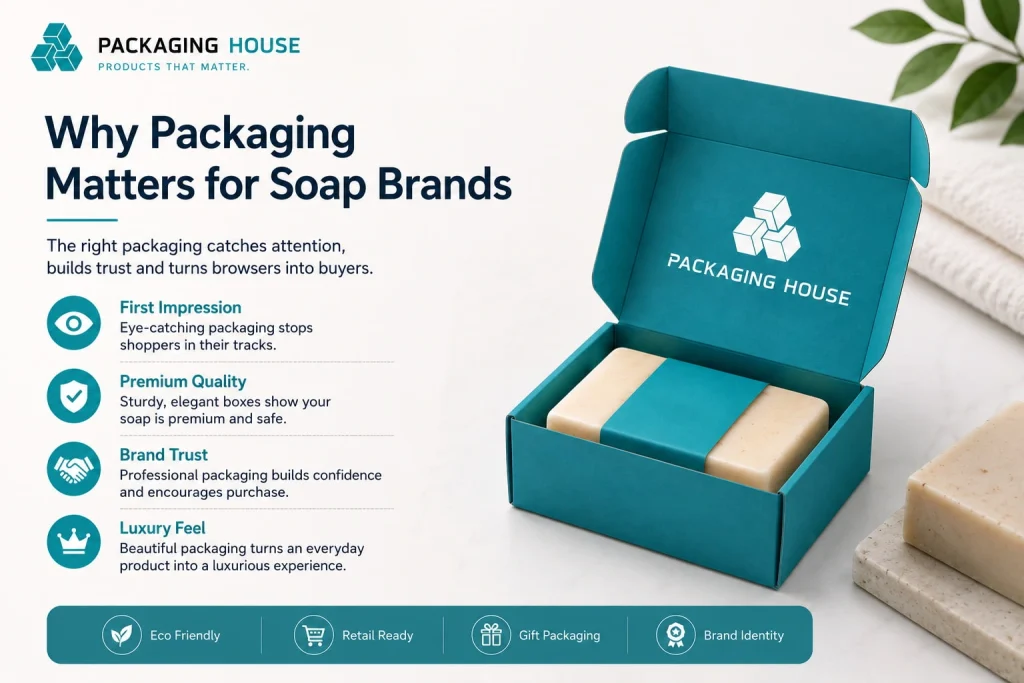
Why Soap Packaging Matters More Than Most Brands Realize
Most people buy soap on a whim, spending just a few seconds looking at the shelf. Because it is such a quick, visual decision, your box has to do the heavy lifting of selling long before anyone flips it over to read the ingredients.
Here is how a great box works behind the scenes to turn browsers into buyers:
- It catches the eye immediately in a crowded aisle.
- A sturdy, clean box tells customers your soap is premium and safe.
- A professional presentation makes people feel secure buying from you.
- Beautiful packaging turns a simple daily routine of the customer into a luxury.
Ultimately, your packaging is the bridge between a quick glance and a final checkout. When you perform better in the presentation, your conversion rates take care of themselves.
Understanding Kraft Soap Boxes
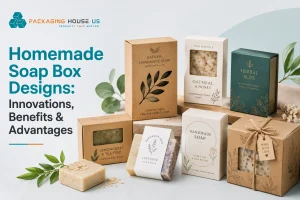
Kraft soap boxes are made from Kraft paper or Kraft board. The primary material is unbleached, minimally processed paperboard that keeps its natural brown fiber tone rather than being coated white. The construction is straightforward. A single layer of sturdy paperboard is folded into a tuck-end or reverse-tuck box. The rigidity of the paperboard is kept enough to hold a bar of soap without needing extra internal support. The unbleached finish is what gives Kraft its recognizable, earthy look and it’s also what makes it one of the more genuinely eco-friendly packaging materials available.
Why Many Handmade Soap Brands Choose Kraft
Handmade soap and cold-process soap brands lean toward Kraft because the material’s raw, unfinished look reinforces exactly what the product claims to be: natural, small-batch and minimally processed. A glossy, heavily printed box next to an artisanal cold-process bar creates a mismatch a customer notices instantly. Kraft removes that mismatch. It also supports organic and natural soap positioning without requiring extra copy to explain it, since the packaging itself communicates sustainable branding before a customer reads the label.
When Kraft Packaging Works Best
Kraft performs best in settings where the buying decision is already leaning toward trust and story rather than pure visual comparison.
- In Farmers’ markets where customers are buying based on conversation and ingredient transparency as much as looks.
- In craft fairs and pop-up events where handmade positioning is part of the sale
- Small business packaging on tight budgets, since Kraft is typically less expensive to source and print than laminated or coated stock
- Eco-conscious customers are actively looking for recyclable, minimally processed materials
Understanding Window Soap Boxes
Window soap boxes use the same paperboard or rigid stock as a standard soap box with a die-cut opening. The die-cut opening is usually covered with a clear PET window positioned to show the product inside. The die-cut shape can be a simple oval, rectangle or a custom shape that follows the soap’s silhouette. Its core function is product visibility. So the box sells by letting the product speak for itself.
Why Window Boxes Attract More Attention
A window box lets customers see the soap directly, which matters enormously for products where color, texture, or visible ingredients like oatmeal, lavender buds or swirled colorants are part of the appeal. Instead of relying on a printed image or description, the packaging shows the actual bar, texture and all. On a crowded retail shelf, that visibility creates stronger shelf appeal than a fully enclosed box, since shoppers are drawn to products they can evaluate visually before picking them up.
When Window Packaging Performs Best
Window boxes tend to outperform Kraft in situations where visual confirmation is part of the purchase decision. For example:
-
- Gift packaging
- Retail displays
- Seasonal collections
Which Soap Packaging Sells Better?
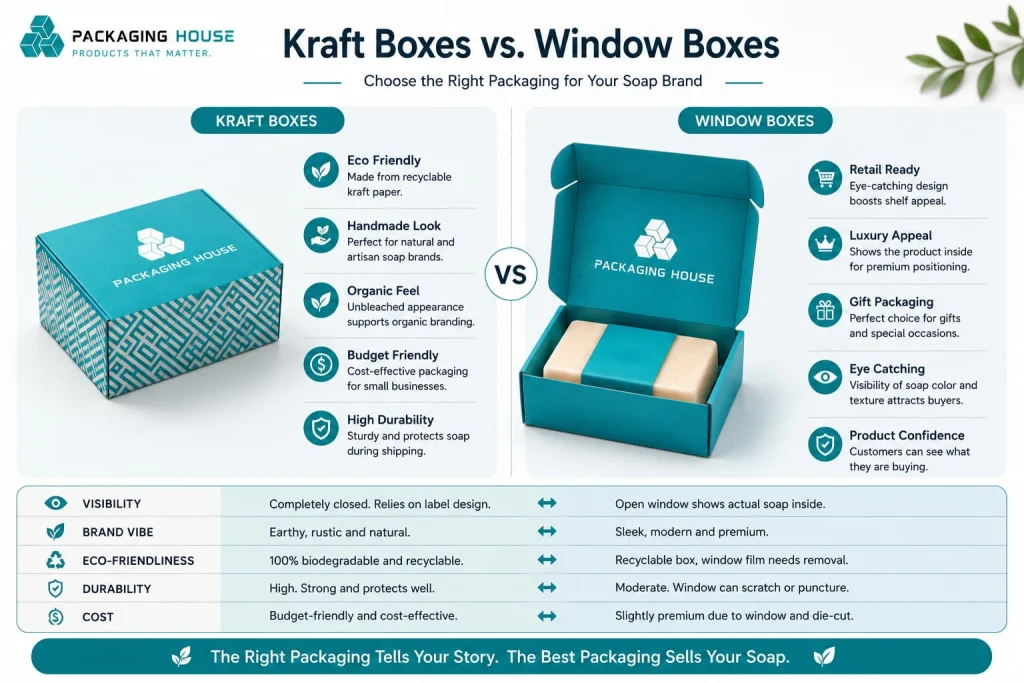
When choosing between Kraft and window boxes for your soap, you don’t need to get bogged down in dozens of minor details. Focus on these five key factors to make your decision:
| Factor | Kraft Boxes | Window Boxes |
| Visibility | Completely closed. Relies entirely on your label design and typography. | Open cutout. Customers can see your soap’s color and catch a direct scent. |
| Brand Vibe | Earthy, rustic and strictly natural. Great for organic or handmade positioning. | Sleek, modern and retail-ready. Great for gifting or vibrant, colorful soaps. |
| Eco-Friendliness | Outstanding. 100% biodegradable, unbleached and easy to recycle anywhere. | Moderate. The cardboard is recyclable, but the plastic window film must be removed. |
| Durability | High. Very sturdy and easily survives shipping without getting dented. | Moderate. Cutout edges can crease and windows can scratch or puncture in transit. |
| Cost | Budget-friendly. Standard shapes mean lower manufacturing and setup costs. | Slightly premium. Custom die-cutting and applying the window film adds to the per-unit cost. |
What Actually Drives Soap Sales?
Understanding why customers choose one bar of soap over another helps you select packaging that actively drives conversions. Here are the psychological triggers that your soap box must satisfy on the shelf.
Let Them See the Product
Product Visibility Encourages Impulse Purchases. If your soap has beautiful swirls, textures or dried botanicals, hiding it is a mistake. People like to see exactly what they are getting. A clear view builds trust and turns curious browsers into buyers.
Keep the Packaging Green
Putting natural, handmade soap into a shiny, synthetic-looking plastic box feels wrong to eco-conscious shoppers. A simple, raw paperboard box instantly tells the customer that your green values are genuine, without you needing to write a paragraph about it.
Make Your Brand Recognizable
Brand Identity Shapes Buying Decisions. Your packaging should match your price. If you are charging premium prices, a flimsy, plain box won’t cut it. A clean design, even a simple one-color stamp on Kraft paper, sets the right expectation and makes your brand stick in people’s minds.
Think About the Unboxing
The Unboxing Experience Creates Repeat Customers. The sale doesn’t end at the checkout. Opening a beautifully designed, sturdy box feels like opening a small gift. When the package looks and feels premium, customers are much more likely to show it off on social media which will derive organic conversions.
Which Packaging Is Right for Your Business?
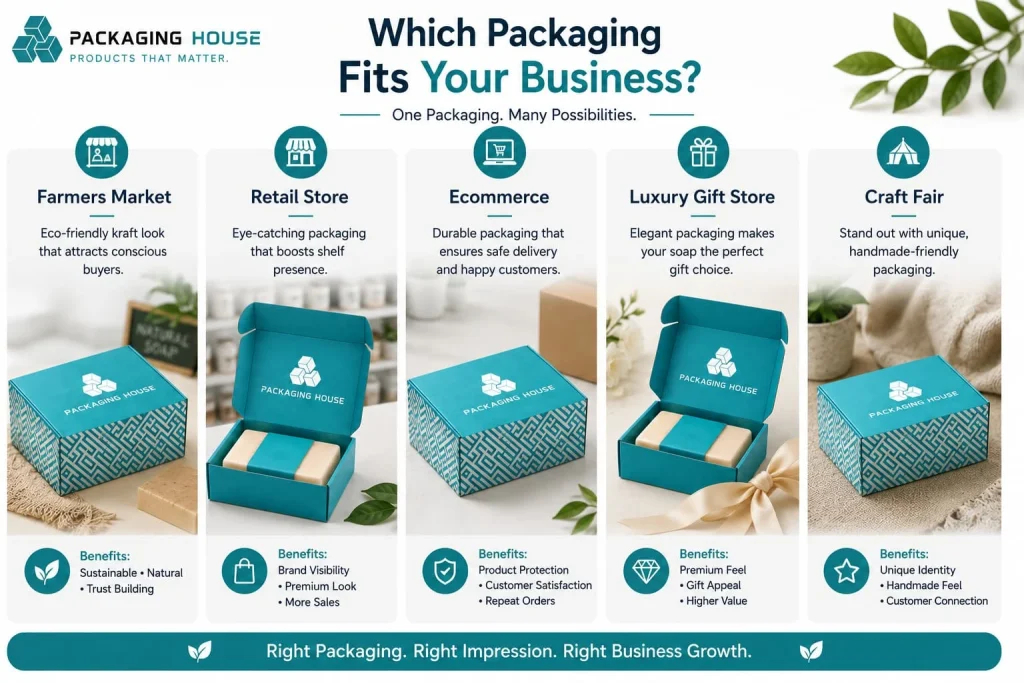
The right box depends heavily on how you sell, who you sell to, and how your business actually runs day-to-day. Let’s see which styles fit different business setups:
Handmade & Organic Soap Brands
Recommended: Kraft Boxes
The material’s natural look reinforces small-batch, ingredient-forward positioning without extra design work.
Luxury & Gift Soap Brands
Recommended: Window Boxes
Visible product and premium finishing options justify a higher price point and make the box gift-ready on its own.
Retail Stores & Supermarkets
Recommended: Window Boxes
Shelf competition rewards immediate visibility and window packaging consistently outperforms fully enclosed boxes in these environments.
E-commerce Businesses
Recommended: Kraft Boxes
Shipping is tough on boxes. Kraft paperboard is incredibly sturdy and holds its shape during transit. Window cutouts can work online too, but they usually need extra wrapping to keep the thin plastic from puncturing.
Small Businesses, Farmers’ Markets & Craft Fairs
The right choice here usually comes down to budget, branding and what customers at that specific venue expect to see. A Kraft box fits the handmade market stall aesthetic; a window box makes more sense if the product’s visual appeal, like a swirled cold-process bar, is doing a lot of the selling.
Can You Get the Best of Both Worlds?
If you are stuck between the natural look of Kraft and the high visual appeal of a window, you do not have to pick just one.
Kraft Boxes with Die-Cut PET Windows
Kraft boxes with a die-cut PET window combine the two approaches directly. The box keeps its unbleached, eco-conscious base material while adding a cutout that shows the product, balancing sustainable branding with the retail appeal of visibility. This hybrid is increasingly common for brands that want to signal natural positioning without giving up the shelf advantage that comes from letting customers see the bar.
Customize Them for Maximum Results
You can elevate either style with small design details. Foil stamping adds a metallic accent to a logo or border without covering the Kraft texture entirely. Embossing or debossing creates a raised or recessed design that adds tactile detail which works particularly well on Kraft’s matte surface. Spot UV adds a glossy highlight to specific elements against a matte background. It is useful for making a logo pop on a window box. Matte and gloss finishes each set a different tone, matte reads as understated and natural, gloss reads as polished and retail-ready.
How to Choose Soap Packaging That Matches Your Brand
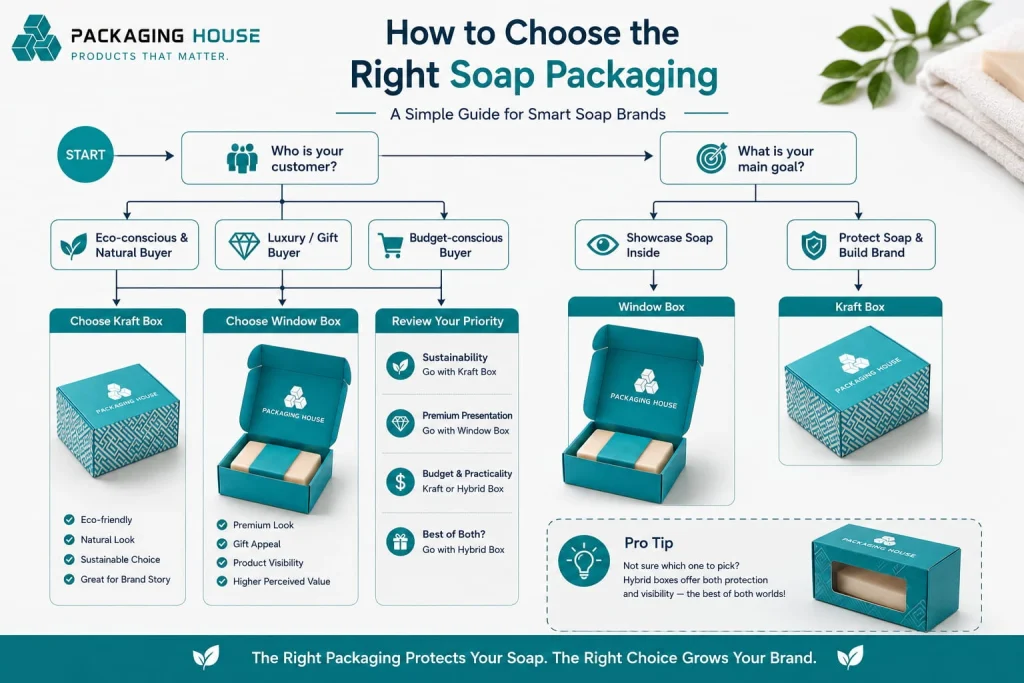
Choosing your packaging is about balancing your budget, your shipping logistics, and your brand’s overall vibe. Before deciding, work through these factors:
- Target audience: eco-conscious and value-driven buyers respond to Kraft, while gift shoppers and luxury buyers respond to window boxes
- Product type: visually distinct soaps (color, swirls, embedded botanicals) benefit more from a window than a plain-colored bar
- Sales channel: retail and gifting favor window boxes, while markets, fairs and direct sales work well with Kraft
- Budget: Kraft is typically the lower-cost option per unit, especially at smaller order volumes
- Sustainability goals: Kraft alone is the more straightforwardly recyclable option, though PET windows can still be recycled separately in many regions
- Brand identity: an artisanal, natural brand and a polished, premium brand call for different materials entirely
- Customer expectations: consider what similar products at your price point and sales channel typically look like on the shelf
Conclusion
Your box is your brand’s silent partner. It has to tell your story in a matter of seconds. There is no universal winner between Kraft and window soap boxes. Kraft boxes are perfect for telling a story of handmade care, natural ingredients, and simple, eco-friendly living. Window boxes are the champions of the retail shelf, where letting the visual beauty of your soap shine through is what actually makes the sale. Pick the box that fits your day-to-day business operations and your customers’ expectations, and your packaging will easily do the selling for you.
Ready to order your box? Contact our experts at Packaging House US to design a personalised box especially designed for your product.
Frequently Asked Questions
Is kraft packaging cheaper than window boxes?
Yes. Kraft boxes are simpler to make and print. Adding custom cutouts and gluing in plastic window films adds extra steps to the manufacturing process which raises the cost.
Are window soap boxes better for retail stores?
Yes. In a retail shops, customers want to evaluate products quickly. A window box lets the customer see the color and texture of your soap without opening the packaging.
Can I get Kraft boxes with windows?
Absolutely. This is a highly popular hybrid option. It gives you the natural, rustic appeal of Kraft paper combined with a clear view of your soap.
What works best for gift-market soap?
Window boxes are the winner here. When people buy soap as a gift, they want to see the craftsmanship, colors, and textures immediately. A window box makes the product look retail-ready and premium, which makes it much easier to justify a higher gift-tier price.