Skip to content

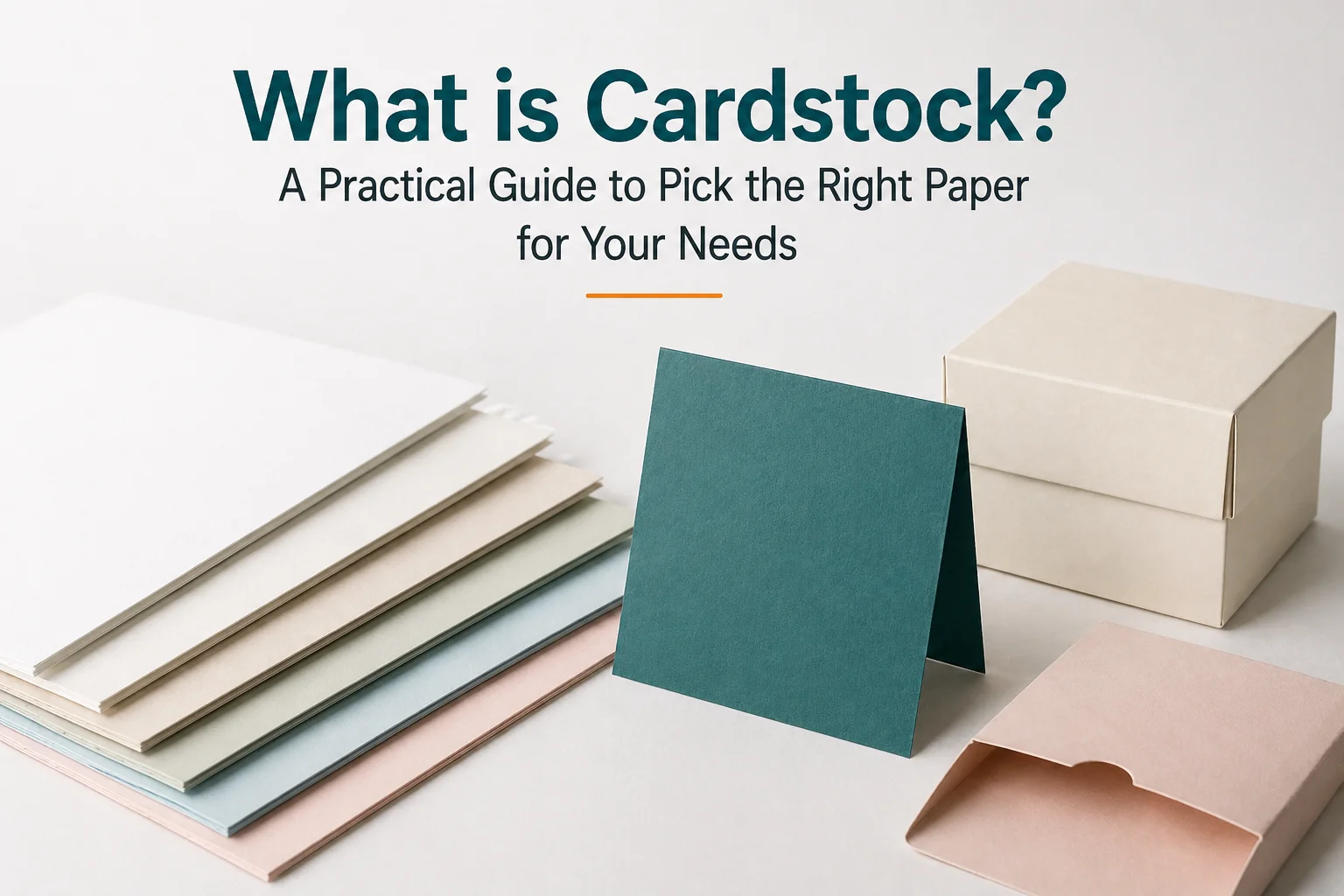
What is cardstock? What actually separates it from standard paper? Is it just thin cardboard, or is it something else entirely? It is the common question you might have heard many times. However, it is the industry’s go-to material. Meanwhile, if you are new, it can be a bit confusing.
Think of cardstock as the Goldilocks of the paper world. It’s much sturdier and thicker than the flimsy sheets you put in a home office printer. But it is not as bulky or rigid as it is used for creating a heavy corrugated shipping box.
Meanwhile, it occupies that perfect middle ground. It is strong enough to stand upright on a retail shelf and hold a crisp fold, yet flexible enough to run through a high-end printing press without jamming the gears.
In this guide, we will cover cardstock in detail. Also, if you want to know information about other packaging materials, you can visit Packaging House US.
What Exactly Is Cardstock?
Cardstock is often called cover paper in the packaging industry. However, it is essentially a heavyweight version of paper. If you held a sheet of standard copy paper in one hand and a sheet of 100 lb cardstock in the other, the difference would be night and day. Standard paper is translucent and wrinkles if you breathe on it too hard; cardstock is opaque, stiff, and built to last.
Because it’s so versatile, cardstock is the backbone of the branding world. You interact with it every single day without even realizing it.
Here are the main uses of cardstock in the packaging industry:
- Retail Product Boxes
- Food Packaging (Dry Items)
- Folding Cartons
- Inserts and Dividers
- Luxury Packaging
- Tags and Labels
- Hanging Display Cards
- E-commerce Inner Packaging
- Subscription Box Inserts
What are the Different Types of Cardstock?
You can’t just ask for cardstock and expect a single standard size that fits all. However, depending on your use, you will need to choose the right type of material. Here are some of the types you must explore:
The Standard Cardstock
It is your everyday workhorse. It’s smooth, reliable, and takes ink beautifully. If you are just starting with flyers or basic product inserts, standard cardstock is usually the most budget-friendly way to use.
Heavyweight Cardstock
It is the muscle of the paper world. It’s significantly thicker and more rigid than the standard stuff. Therefore, it is the top choice for retail packaging that needs to hold its shape while being handled by dozens of customers in a store. It feels expensive the moment you touch it.
Textured Cardstock
Textured cardstock adds a tactile layer to your branding. You can get linen finishes that feel like fabric, or felt finishes that have a soft, organic tooth to them. Meanwhile, it is how luxury brands separate themselves from the competition. They focus on how the packaging feels, not just how it looks.
Specialty Cardstock
Sometimes you need to get loud. Specialty stocks include metallic foils, glitter coatings, or even pearlized finishes that shimmer in the light. While these carry a higher price tag, they have incredible power to attract customers from the retail shelf.
Understanding Cardstock Thickness and Weight
It is one of the most confusing parts for beginners. If you don’t know how to measure cardstock thickness, you will also be stuck. At first, the different terminology may seem overwhelming, but once you understand the basics, it becomes much easier to compare options and make the right choice.
Paper Density
Paper density refers to how tightly the fibers are packed together. Meanwhile, a higher density means stronger and more durable cardstock, which is especially important for packaging applications that require long-lasting performance.
Basis Weight (The lbs System)
It is used mostly in the US. However, this is measured in pounds. You might see an 80 lb cover or 110 lb index. Generally, the higher the number, the heavier the sheet. But be careful, these different types of paper have different base sizes, so an 80 lb text sheet is much thinner than an 80 lb cover sheet.
Grams per Square Meter (GSM)
It is the international standard, and it’s much more logical. It tells you exactly how much one square meter of the paper weighs.
- 200–250 GSM: Great for high-end brochures.
- 300–350 GSM: It is good for business cards and retail boxes.
- 400+ GSM: It is very thick, heavy-duty stock for premium packaging.
Points (The PT System)
The PT system measures the literal thickness using a tool called a caliper. One point equals 0.001 inches.
- 10 pt: Thinner, flexible stock.
- 16 pt: Thick, rigid stock. However, it is the gold standard for high-quality packaging.
Coated vs. Uncoated Cardstock: What’s the Difference?
Another important decision is choosing between coated and uncoated cardstock. Each option has its own advantages, and the right choice depends on your specific needs and design goals.
- Coated Cardstock: It has a smooth layer (usually clay-based) applied to the surface. It stops the ink from soaking into the paper fibers. However, the result will be sharper images and incredibly vibrant colors. You can get this in Gloss (shiny) or Matte (smooth but dull).
- Uncoated Cardstock: However, it is raw, natural paper. It’s porous, so the ink soaks in a little. This gives it a soft, earthy look. It’s the only real choice if you want people to be able to write on the material like a thank you note or a gift tag.
In general, coated cardstock is best for product packaging and designs that require bright colors and sharp images. Meanwhile, uncoated cardstock works well for projects that need a natural look or require writing, such as invitations or personal stationery.
Common Materials and Grades of Cardstock
Cardstock is made from different materials, and each one has its own strengths and characteristics. Understanding these materials can help you choose the best option for your packaging or printing needs.
- Solid Bleached Sulfate (SBS): It is the high-end stuff. It’s made from pure wood pulp and is bright white all the way through. If you’re packaging cosmetics or high-end electronics, SBS is the industry standard.
- Folding Carton Board: Also, it is the practical choice. However, it is a strong, slightly more affordable, and designed to fold cleanly without the edges “cracking” or looking messy.
- Recycled Stock: As more customers care about the planet, recycled cardstock is exploding in popularity. It often has a natural, slightly off-white look that tells a green story for your brand.
How to Choose the Right Cardstock for Packaging
Choosing the right cardstock is not difficult until you know your purpose and the different types of cardstock. By following a few practical steps, you can make a decision that fits your needs and budget. As you know, the different measurements, types, and uses, here you will know what to check when choosing the right material for your needs.
- Know Your Purpose
- Consider Weight and Thickness
- Choose the Right Finish
- Think About Printing Needs
- Budget Matters
Final Thoughts
At the end of the day, cardstock is more than just a thick paper. It is important to wrap your product and display it visually wow. The moment a customer picks up your box or your business card, they immediately judge your product quality based on that material. However, a flimsy, thin cardstock sends a message of being cheap. Meanwhile, sturdy cardstock sends a message of quality and trust.
By taking the time to understand weights, finishes, and materials, you aren’t just buying paper, but you are investing in how the world perceives your brand. Take your time, explore the options, and choose wisely because the right cardstock doesn’t just hold your product, it displays it as premium.