Skip to content

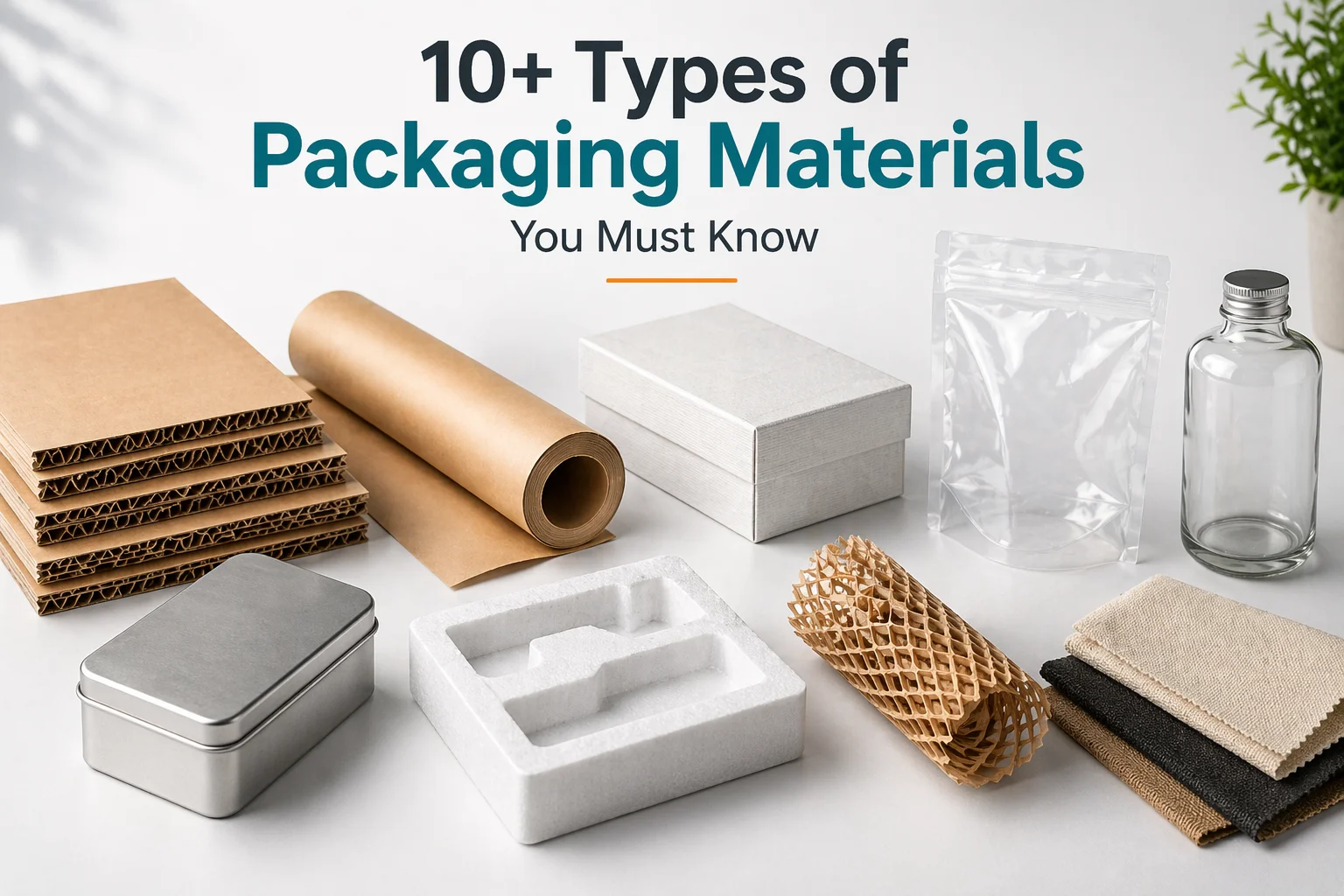
In today’s market, the right packaging decision defines how far your brand can go. Your brand’s first impression depends on the material you choose. Picking the right material is the most important step for your brand. If you are a brand owner, manufacturer, or e-commerce seller, it directly affects product safety, cost, and customer perception. This guide covers the major types of packaging material, what makes each one useful, and which products they work best for. This guide explains the main packaging materials, why they work, and which products they suit. It also covers cost, sustainability, and printing options.
Why Your Choice of Packaging Material Matters
Most brands treat materials and packaging as an afterthought. This is actually a costly mistake. Material choice directly affects product safety during shipping and dimensional weight charges. Today, more buyers choose brands that use biodegradable packaging, so your choice of material also affects your reputation. The right packaging and materials decision balances protection, cost, printability, and sustainability all at once.
10+ Types of Packaging Materials
1. Kraft Paper
Kraft paper is produced from wood pulp using the sulfate process. It gives a natural brown color and strong fiber structure. Kraft paper provides tear resistance and protects food contents from moisture during delivery. Brands in food, retail, cosmetics, and gifting use it every day because it looks premium and costs less. Custom kraft boxes is one of the best eco-friendly choices. It is very useful for food pouches, shopping bags, mailer wraps, and gift packaging.
2. Cardboard
Custom cardboard packaging is very useful in many industries, and many businesses prefer this material for their packaging. We layer paperboard sheets to make it light, strong, and easy to print. It supports offset printing, UV coating, embossing, and lamination without bending. Many retail brands, cosmetic, and food businesses pack their products in custom cardboard boxes. This material is biodegradable and recyclable. The cost per unit stays low, even for small orders, so it is helpful for growing brands. Cardboard boxes protect products during retail and e-commerce shipping without adding extra weight.
3. Corrugated Board
Corrugated fiberboard is the backbone of the global shipping industry. It has three layers. Two flat outer liners sandwich a fluted middle layer. Its wavy center layer absorbs pressure and distributes impact evenly across the box. This makes corrugated board more protective than single-layer cardboard for shipping fragile or heavy products. E-commerce brands rely on it because courier networks are rough on packages. Our custom corrugated boxes also stacks well in warehousing, material handling, and packaging environments, which reduces storage costs. It resists punctures and protects against impact. We measure its durability using the Edge Crush Test (ECT). The material is 100% recyclable.
4. Rigid Board
A rigid board is a high-density material that does not fold. It stays in a fixed shape from the factory to the customer. It holds its exact shape from production to the moment the customer opens it. This feature makes rigid boxes the standard for luxury products. Electronics, fine jewelry, high-end cosmetics, and premium gift sets all arrive in customized rigid boxes with logo for a reason. The structure supports premium finishes that no other material handles as well. Magnetic closures, ribbon pulls, foil stamping, and soft-touch lamination all work cleanly on rigid boards. It costs more than kraft paper and cardboard.
5. Paperboard
Paperboard is a thick, paper-based material that is thinner and lighter than corrugated board. Custom paperboard packaging is strong enough to hold its shape and keep shipping costs low. It provides a clean, smooth surface for ingredients and logo printing. This material helps brands grab attention through vibrant colors and crisp graphics. It is one of the most affordable packaging materials for lightweight products. It also works well for food packaging because we add grease-resistant and moisture-barrier coatings to its surface.
6.Mylar
Mylar is a polyester film made from stretched polyethylene terephthalate (PET). It creates an extremely strong and flexible barrier against moisture, oxygen, light, and odors. This makes it one of the most effective materials for preserving product freshness over long periods. Food brands use it for coffee, dried fruits, nuts, snacks, and cannabis products. Custom mylar bags are also popular in pharmaceutical and medical packaging because they protect sensitive contents from contamination. Mylar is lightweight, puncture-resistant, and available in clear, matte, or metallic finishes. Brands can print vibrant graphics directly on its surface for strong shelf appeal. It is also resealable, which adds convenience for end users.
7. Foam
We add foam to protect products that are not safe in the simple outer box. Electronics, medical devices, glassware, and precision instruments all need internal cushioning that absorbs vibration and impact during transit. The most common foam types are polyethylene, polyurethane, EVA, and expanded polystyrene. Each offers a different density and compression rating suited to different product weights and fragility levels. Custom foam inserts are cut or molded to fit the exact shape of the product to prevent it from moving inside the box.
8. Solid Bleached Sulfate (SBS)
SBS is a premium-grade paperboard. It is white on both the inside and outside. This material provides the best canvas for photographic printing. Many cosmetic brands use it for a clean, medical, or high-end look. It is moisture-resistant and very stiff. This ensures the box keeps its shape on a store shelf. It represents the peak of different packaging materials for retail.
9. Aluminum Foil
Aluminum foil blocks light, oxygen, and moisture more effectively than most other thin-film packaging materials. They prevent spoilage and keep food fresh. Aluminum materials and containers used in food packaging often combine foil with paperboard. Coffee bags, chocolate wrappers, pharmaceutical blister packs, and meat and cheese packaging materials all use aluminum for this reason. This material has a higher recycling rate in the United States than most plastic films, though the recycling infrastructure varies by region.
10. Plant-Based Bioplastics
This material comes from corn, sugarcane, or starch. As environmental issues in packaging materials grow, bioplastics offer a solution. We make this material from industrial cornstarch-based bioplastics that replace polystyrene on many food and retail shelves. This material looks and feels like traditional plastic but breaks down in compost. They provide a clear window for customers to see the product. Using biodegradable packaging materials like these helps brands meet modern green standards and reduce dependency on fossil fuels.
11. Molded Pulp
Molded pulp uses recycled paper and water. It is shaped into custom inserts to hold products in place. Egg cartons are a famous example of this material. It absorbs shocks and prevents movement inside a larger box. It is a great alternative to plastic foam. It comes from scrap, recycling scrap materials, and packaging options. It is also biodegradable and breaks down naturally over time. This makes it a strong choice for sustainable packaging solutions.
Material Sustainability and the Modern Consumer
Modern shoppers audit the brands they buy. They look for the recycling symbol. Using eco-friendly packaging is not just a trend, it is a business requirement.
- Custom Kraft Packaging: Signals honesty and environmental care.
- Biodegradable Materials: Ensure your brand leaves no trace in landfills.
- Vegan Materials: Avoid animal-based glues to reach ethical markets.
By focusing on environmental issues in packaging materials, you build trust. Customers are more likely to return to a brand that shares their values. We help you source biodegradable and recyclable packaging material that performs as well as traditional options.
Checklist Before Making a Material Choice
- Identify how fragile your product is.
- Check the product weight.
- Analyze the transit duration.
- Define your brand requirements and image
These 10+ types of packaging materials give you the edge to save money on shipping, reduce your environmental impact, and deliver a better experience to your customers.
Why Packaging House US?
We are your partner in the packaging materials and supply chain. We look at packaging materials and their features to find the exact match for your items. Whether you need fruit and vegetable packaging materials or luxury rigid boxes, we have the expertise.
We focus on:
- To boost your brand recognition with custom boxes with a logo.
- To protect your retail goods with custom cardboard packaging:
- To ensure you never run out of stock of packaging material.
Your product deserves packaging that is as high-quality as the item inside. We help you navigate the complex world of packaging and shipping materials to find the most efficient path forward. Upgrade to professional retail packaging and contact us through a call at +1 (409)-995-3955. Partner with us today to lower your costs and elevate your unboxing experience.