Skip to content

Visual quality defines your brand identity in a crowded market. Poor printing makes packaging look cheap. Customers may ignore the product on the shelf. If you need clear printing with perfect colors, you need to understand offset printing. This method remains on top for large-scale professional printing. It offers a level of detail that other methods cannot match. This guide breaks down the mechanics and modern advantages of this industry-leading technique.
How Offset Printing Ensures Accurate Colors
Modern brands need packaging that reflects their true value. At Packaging House US, we use advanced printing to make every design vibrant and attractive. Whether you need printed rigid boxes or high-volume custom printed boxes with a logo, this process delivers excellence. Understanding the offset printing meaning helps you choose the right shipping boxes and reduce costs.
What is Offset Printing?
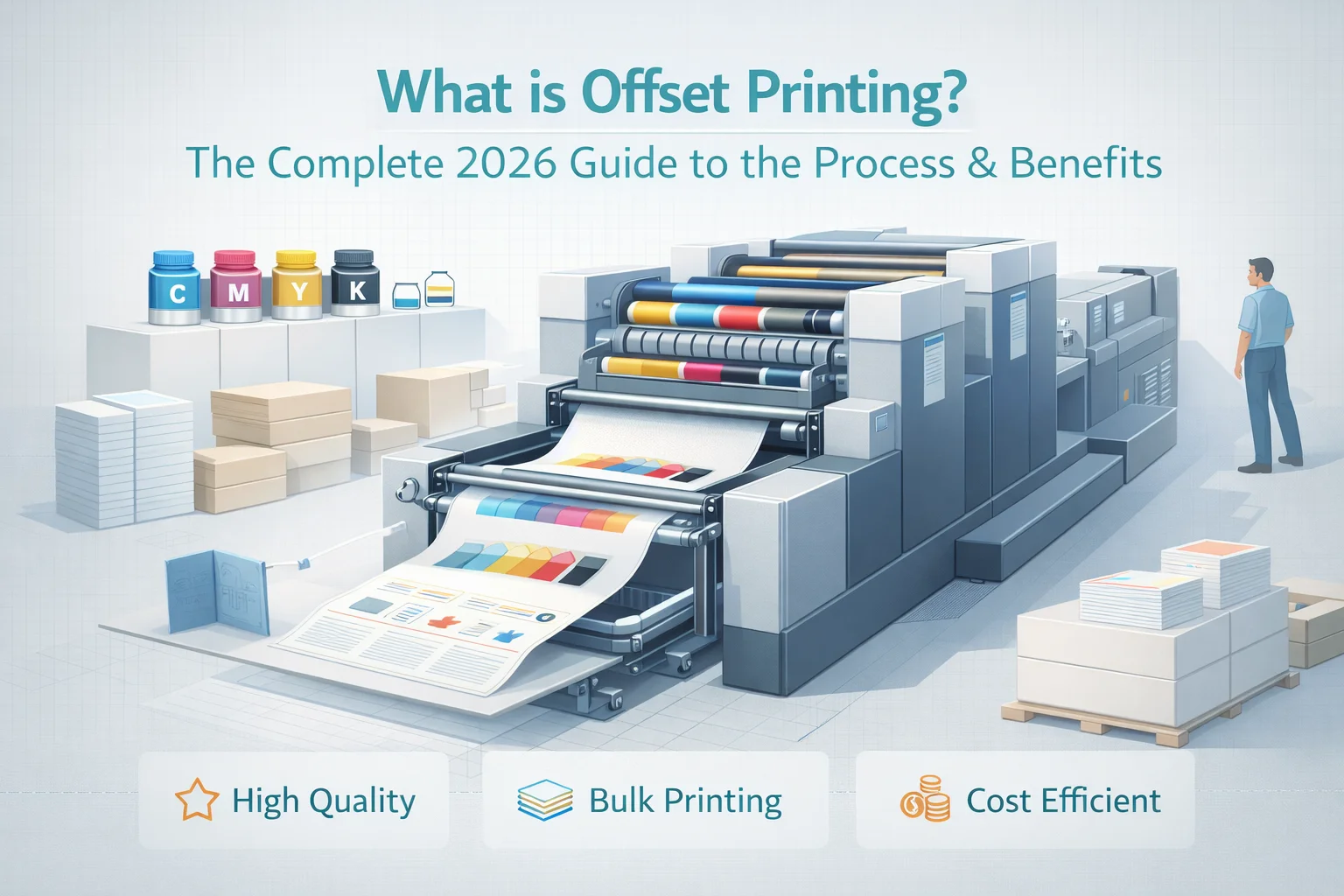
Offset printing, or offset lithography, is a mechanical printing technique. Offset printing uses a three-step process to get ink onto your box. First, ink sticks to aluminium printing plates. Next, the ink moves onto a soft rubber roller. Finally, the rubber mat presses the ink onto the substrate. It is the best choice for printing thousands of boxes with perfect color. This method produces the cleanest, most consistent results for high-volume jobs. It is the backbone of the global commercial offset printing industry.
The History of Offset Lithography
Lithography began in 1796 using heavy stone slabs. Modern printing has changed since the early 1900s. Ira Washington Rubel accidentally discovered that printing onto a rubber blanket produced a sharper image than printing on paper. This accidental discovery led to the birth of the modern offset press. Now, lightweight metal and advanced chemistry are involved instead of stones and manual labor. Offset printing is used all around the world for printing magazines, books, and luxury packaging.
How the Offset Printing Process Works?
The offset printing process works through a well-coordinated system. It uses large rotating cylinders, and each cylinder has a specific job.
1. Plate Making
The first step is to start with the aluminium printing plates, which are light-sensitive. A laser etches the digital artwork into the metal. Each color needs its own plate. This is an important step in the lithography process.
2. The Dampening System
When the metal plates are on the cylinders accurately. They rotate and pass through the dampening unit. The dampening system applies a thin layer of water to the plate. The water sticks to the empty areas of the design. This prevents ink from spreading where it doesn’t belong.
3. The Ink Fountain
Next, the ink fountain releases oil-based offset ink printing fluid. Because oil and water never mix, the ink only sticks to the dry, etched parts of the plate. This creates a clean, high-contrast image of your logo. It prevents colors from bleeding into unwanted areas. The press uses the CMYK Color Model – Cyan, Magenta, Yellow, and Black – to create a full spectrum of colors.
4. The Rubber Blanket
The plate cylinder presses against a rubber blanket. The blanket picks up the inked image. Rubber is flexible and soft, which conforms to the texture of the paper or cardboard. This creates a high definition image that a hard metal plate can achieve.
5. The Impression Cylinder
Finally, the substrate passes between the rubber blanket and the impression cylinder. This cylinder applies heavy pressure. Then, ink goes deep into the fibers of the material. This ensures your custom-printed rigid boxes have long-lasting colors.
Key Types of Commercial Offset Printing
Understanding these categories helps you pick the right process for your material and order size. Here are the main types of lithographic printing setups.
- Sheet-Fed Offset: This press uses individual sheets of paper fed into the machine one by one. Mostly, it is used for high-end custom cosmetic boxes wholesale and marketing materials.
- Web Offset: This system uses rolling sheets of paper to maintain speed and efficiency. It works best for newspapers, catalogs, and bulk coupon printing.
- Quick-set: For this type of printing, silicone plates are used instead of water. This creates high-definition images and clear colors to make it ideal for luxury high-definition labels.
Offset vs. Digital: Which Should You Choose?
Many business owners ask whether they should use digital or offset printing. Both have benefits, but they serve different needs. The following table is
| Feature | Offset Printing | Digital Printing |
| Best Volume | 1,000+ Units | 1 to 500 Units |
| Color Accuracy | Perfect (Pantone Match) | Good (CMYK Only) |
| Setup Cost | Higher (Plate Fee) | Low to Zero |
| Unit Price | Drops as volume grows | Stays the same |
| Detail Level | Extremely Sharp | Sharp |
If you are a startup testing a new look, digital is great. If you are a growing brand ordering thousands of custom apparel boxes with a logo, offset saves you money.
5 Major Benefits of Offset Printing
Why should you choose lithographic printing for your packaging printing project? The advantages of offset printing are clear.
- Superior Image Quality: You get sharp lines and fine halftone dots. No other method produces such a clean finish.
- Cost Savings: As you increase your total print quantity, you save more money. It is the most economical choice for bulk orders.
- Speed: Advanced machinery of offset printing can print thousands of sheets per hour.
- Durability: Offset ink printing resists fading and scratching. It stands up to the friction of shipping and handling.
- variety: You can print with metallic or fluorescent inks, which digital printers do not support.
Technical Overview of CMYK and Halftones
How does a press make millions of colors with four inks? It uses halftone dots, which are tiny dots of ink in the logo pattern or label design. Your eye blends them, and you can see a full color image. The CMYK color model is the industry standard. Layering four colors recreates almost any image. For colors outside this range, we use Pantone Matching System (PMS) to keep your brand identity the same across the world.
Make the Right Choice
If you understand offset printing, you can get a major lead over other brands. It is actually a combination of chemistry, mechanics, and the arts. This method of printing is the best way to produce high-quality, high-volume packaging. If you need 500 boxes for a local event, digital printing can work. But if you are launching a product on a national level, offset is the best choice. Offset printing provides the quality and security your business deserves. From custom-printed rigid boxes to everyday retail packaging, we have the secret to make you shine.
Bring Your Packaging Vision to Life Today
Partner with Packaging House US for your next printing run. We provide technical skills to secure your investment. We guide you in choosing the right material and stocks. Our team handles the full offset printing process from start to the final delivery. Contact our team at +1 409-995-3955 to get a free quote.