Skip to content

Choosing the right finish is the final, critical step in your design process. It determines how light hits your product and how a customer feels when they hold it. Choosing matte or glossy is more than just looks. It is about functionality, durability, and brand positioning. At Packaging House US, we see how the right coating transforms standard containers into custom-printed boxes that demand attention.
High-end brands often struggle with matte versus glossy decisions. A glossy surface looks bold and bright. Matte surfaces give a simple, elegant look. When designing custom rigid luxury boxes, the finish represents your brand. It must align with your marketing goals and the physical environment where the product lives.
What is Matte Finish?
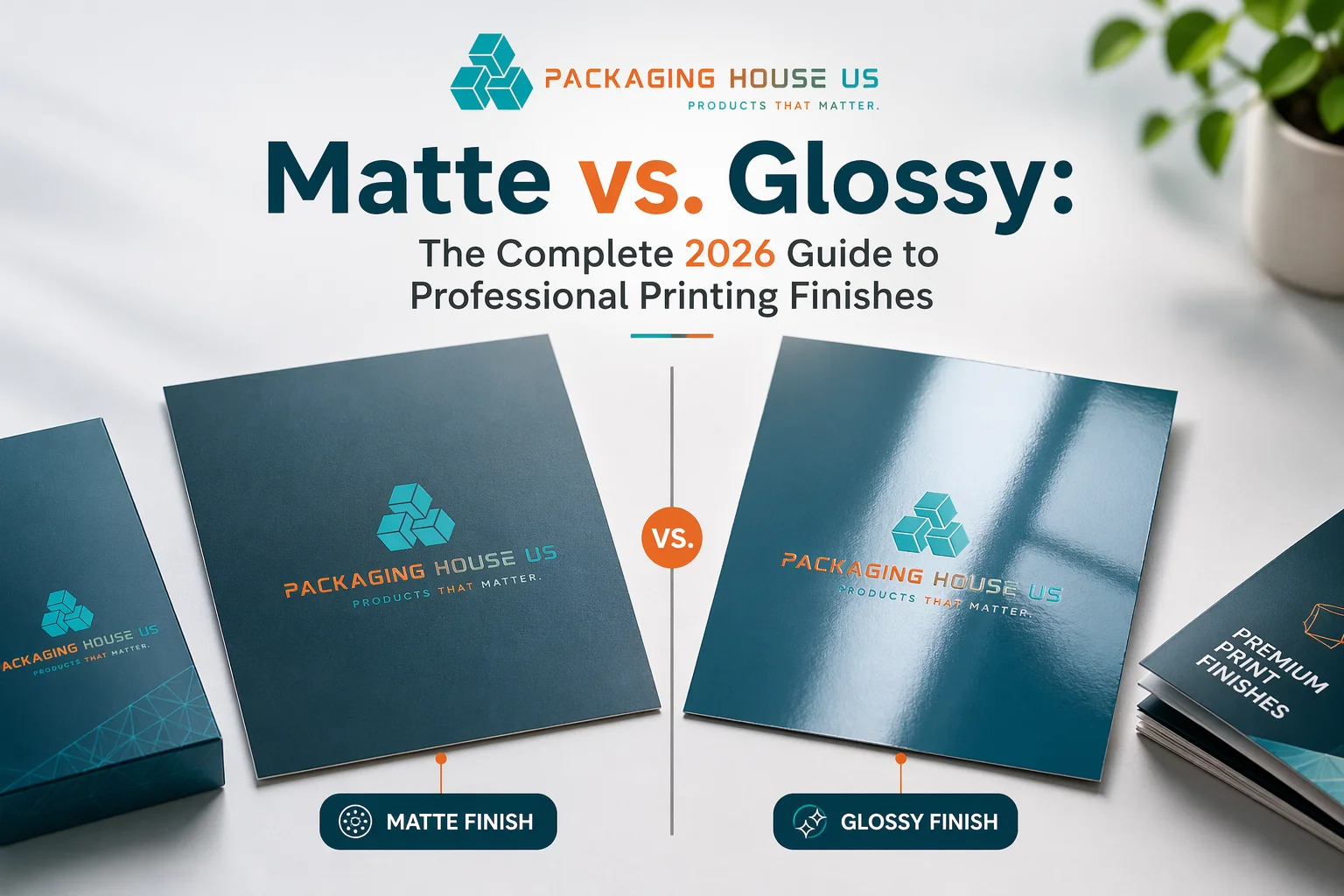
A matte finish is a non-reflective coating that scatters light rather than reflecting it. This creates a soft, muted appearance. Matte paper has a soft, dull surface with no shine, which removes glare. It is a premier choice for the text-heavy designs or items viewed under bright retail spotlights. For custom rigid luxury boxes or high-use retail packaging, a matte finish provides better scuff resistance. For custom boxes with a logo, a matte base keeps your branding clear from every angle without glare.
How Glossy Finish Works
A glossy finish acts like a mirror. It uses a high shine coating, i.e., UV coating or aqueous coating, to reflect light directly at the viewer. This increases the color saturation and vibrancy. Colors look bold on the surface. Blacks appear deeper, while bright colors pop with more intensity. If you design for photography or high-impact visuals, then glossy printing paper is the best option. It creates a slick, smooth surface that feels modern and energetic. However, this high-shine look comes with a trade-off in certain lighting conditions.
Key Differences Between Matte and Gloss
Each finish has a different look, feel, and purpose. Let’s look at the main differences between matte and gloss finishes.
| Feature | Matte Finish | Glossy Finish |
| Light Reflection | zero glare | Reflects light; high glare |
| Color Impact | Muted, realistic, soft | Vibrant, high contrast, |
| Fingerprint Resistance | High; hides smudges | Low shows every touch |
| Tactile Feel | Velvety, paper-like, grippy | Slick, smooth, plastic-like |
| Best Use Case | Luxury, text-heavy, high-handling | Photo-centric, retail |
How Matte and Gloss Affect Visibility and Glare
The biggest difference between glossy and matte is light reflection and glare. Glossy surfaces reflect light in a straight line. Under strong store lighting, glare on glossy boxes can cover up important details.
Before choosing between gloss or matte finish, think about your customers, and if your design includes detailed instructions, matte finish is a good option for you. By eliminating harsh reflections, matte finishes ensure every word remains legible. This keeps contrast and clarity stable under any lighting. That’s why gallery posters often use matte instead of gloss.
Durability Differences Between Matte and Gloss
Physical interaction changes the gloss vs matte equation. Glossy surfaces are magnets for oils. Every time a customer touches a glossy box, they leave a mark. With frequent use, glossy boxes, stickers, or cards can start to look smudged or dirty. Matte surfaces stay fingerprint-resistant. Custom rigid luxury boxes, or high-use retail packaging, matte provides better scuff resistance. It stays looking “new” longer. If you want the best of both worlds, consider spot UV finishing. This allows you to have a matte base with glossy accents on your logo.
Role of Surface Type in Ink Absorption
The difference between glossy and matte also goes down to the fiber level. Ink Absorption varies between the two.
- Glossy paper for printing has a non-porous coating. The ink sits on top. This prevents ink spread and keeps lines razor-sharp.
- Matte paper absorbs more ink into the fibers and makes a softer image.
Our professional printers adjust their “dot gain” settings based on these photography finishes. This ensures that the final image remains accurate.
Specific Industry Use Cases
Business Cards and Stationery
Before choosing matte or glossy finishes, it is important to know about your business needs.. Law firms and architects prefer matte finish. Creative agencies and photographers choose glossy business cards to showcase their portfolio’s color range.
Marketing Posters Material
A glossy movie poster delivers that classic theatrical shine, making colors look deep and cinematic. A poster for an informational chart in a hospital will always be with a matte finish to ensure it is readable from a distance under fluorescent lights.
Stickers and Labels
For outdoor use, glossy stickers usually perform better. The gloss coating provides an extra layer of weather protection. However, for indie brands or organic food labels, matte stickers offer a hand-crafted, authentic feel.
Build a Better Box with Packaging House US
Success in the retail market starts with precision. Partner with Packaging House US, and stay ahead of premium packaging aesthetics. We offer advanced options like aqueous coating and UV coating tailored to your specific material. Reach out at info@packaginghouseus.com or call +1 (409) 995-3955 to get a design consultation from our expert team.